Night Rider is a first-person motorcycle game on Roblox built around a very small idea: you ride through rainy night traffic at high speed, pull off tricks, and try not to crash, because you only have a limited number of lives. Everything the store sells sits on top of that one loop. This is a monetization anatomy, a look at every category of purchase the game presents and what each one appears to buy you, written without price tags, because no price figures appear in the sources reviewed for this piece.
The Loop Underneath the Store
Before any purchase makes sense, the core session has to. Night Rider drops you into wet, nighttime traffic and asks you to hold a line while stunts happen around you. The official artwork frames the whole thing from the rider's viewpoint, which is the game's clearest design statement: the road fills the screen, and the sense of speed is the product.
Two constraints shape every run. Speed is the draw, and the life counter is the brake. You can push hard, but a crash costs you one of a finite set of lives, so aggression and caution trade against each other constantly. Tricks are the third element, giving you something to do with the speed other than simply survive it. Together they form a compact arcade loop: ride, risk, stunt, repeat until the lives run out.
What the Store Actually Sells
The store is reachable from a Shop button that sits at the bottom of the screen, and the categories on offer fall into four buckets: a new bike, cosmetics, upgrades, and tricks.
Bikes: the marquee purchase
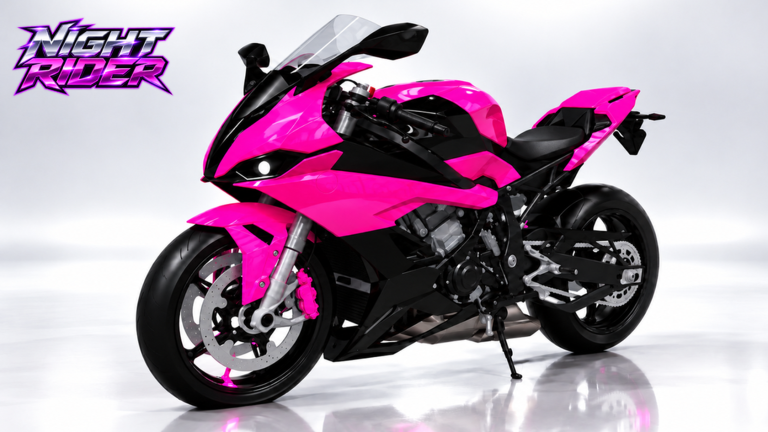
The motorbike is the headline item, and the game is candid about its inspirations. Honda, Suzuki, and Aprilia models appear in the shop under unlicensed names, which tells you the store is selling fantasy ownership rather than a licensed product line. For a player, that means a bike is the most emotionally loaded purchase in the game: it is the object you look at, the machine you ride, and the thing other players see.
Tricks: purchases you feel in the run
Tricks are the second category and the most mechanically meaningful. Buying a new stunt is buying new options during a run, not just a different look. That puts tricks closest to the power end of the spectrum, because they change what you can do on the road rather than how you appear while doing it.
Upgrades and cosmetics
Upgrades occupy the middle ground, and cosmetics sit at the far end of the convenience and expression side. Neither is required to enter a session, and neither is framed as a gate in the sources reviewed here. The store reads as an à la carte menu, not a paywall.
Power, Convenience, or Cosmetics: Where Each Purchase Lands
Sorting the store into the three usual buckets is useful:
- Power: bikes and tricks, because they change what you ride and what you can perform.
- Convenience: upgrades and anything that shortens the grind toward the next purchase.
- Cosmetics: visual items that carry no effect on handling, lives, or stunt availability.
The honest observation is that this game's power purchases are also its identity purchases. In a riding game the bike is both the skin and the stats, which makes the line between power spending and vanity spending blurrier than in most Roblox titles.
The Psychological Hooks
Night Rider's pressure points are structural rather than timer based. The Shop button lives permanently at the bottom of the screen, so the store is one tap away at all times, including immediately after a failed run. The single in-game cash currency flattens every item into one number, which makes comparison easy and spending impulsive. And the life limit does the emotional work: the moment a run ends is the moment a new bike or a fresh trick looks most appealing.
The unlicensed brand names add a layer of appeal as well. Recognizable machines under fictional labels let players chase a specific fantasy without the game ever naming a manufacturer.
Notably, the sources reviewed for this review do not document limited-time banners, bundles, or countdown timers, so this review does not claim them. The pressure here comes from the loop and the interface.
Best-Spent Tier for Each Player Type
- The free player: ride the base loop, learn the traffic patterns, and treat tricks as the long-term goal. The game is fully playable without spending.
- The collector: bikes and cosmetics are where the value sits, since the bike is the visible centerpiece of every run.
- The stunt chaser: tricks are the tier to buy first, because they expand what happens on the road rather than how it looks.
- The grinder: upgrades, if the goal is reaching the next purchase faster.
Progression and Update Quality
Progression in Night Rider is horizontal: you accumulate in-game cash, then spend it on a fresh motorbike or on tricks to take onto the road. There is no documented level ladder or prestige system in the sources reviewed, so the sense of advancement comes from what you own and what you can perform.
On the support side, the developer is Oxba, and the game maintains an official wiki, a Trello board, and a Discord server where documentation lives, though sources reviewing the game note that information there can get buried. That is a reasonable sign of a maintained title, and the reviewed material is dated November 2026, so the game is actively covered right now.
Strengths and Weaknesses
Strengths: a tight, readable loop; a first-person presentation that commits to speed; a store with clearly separated categories; and a life system that gives every run real stakes.
Weaknesses: the store's most appealing items are also its power items, which makes spending feel less optional than a pure cosmetics shop; the shop button's permanent placement keeps purchases in view; and progression documentation is thin outside the developer's own channels.
FAQ
Q: What does Night Rider's store actually sell?
Four categories appear: a new motorbike, cosmetics, upgrades, and tricks. Everything is bought with a single in-game cash currency, and the shop opens from a button at the bottom of the screen.
Q: Do the bikes in Night Rider come from real manufacturers?
No. Honda, Suzuki, and Aprilia machines are represented under unlicensed names, so the shop sells the fantasy of those bikes rather than licensed versions of them.
Q: Is spending required to play Night Rider?
The core loop is riding through rainy night traffic with a limited number of lives, and nothing in the sources reviewed frames any store item as a requirement to enter a session. Purchases change what you ride, what you can perform, and how you look.
Verdict
Night Rider is a focused arcade rider: fast, wet, first-person, and unforgiving about crashes. Its monetization is built into that focus rather than layered on top of it. Bikes and tricks are the purchases that matter, and they matter because they change the ride itself, which is exactly why they are tempting and exactly why a careful buyer should decide what they want from the loop before opening the store. Best for players who want a short, sharp night-traffic session and a garage to grow, and less suited to anyone who wants deep progression systems or a purely cosmetic shop. It is worth a ride, and worth deciding your budget before the Shop button finds you.
Night Rider Codes (November 2026)
No active codes yet for Night Rider; 4 unverified codes are being tracked.
Not yet fully verified. This list updates as sources are rechecked.
No verified active codes are currently recorded for this game. 4 community reported codes are awaiting verification in the Unverified Reports list below, with the source and date we recorded where available.