Why hour-50 verdicts differ from launch-week reviews
Launch-week writeups of Steal a Brainrot tend to describe the same first-hour thrill: you buy a few bizarre-looking creatures, drop them on your base, watch cash tick up, and then discover that the neighbor can walk in and take them. That surprise is real, but it is also the part of the game that burns off fastest. The more useful question for November 2026 is what the game looks like after the shine fades, once the routine of buying, defending, and raiding becomes the actual product rather than the demo of it.
That distinction matters here because Steal a Brainrot is a tycoon at heart with a PvP theft layer bolted on. The loop is short, repeatable, and easy to read. What changes over time is how much friction the loop carries, how often the developer refreshes it, and whether the numbers you are chasing still mean something once everyone around you is chasing the same numbers.
The daily routine once the novelty thins
Out of the box, the game is straightforward. You collect brainrots for your base, each one earns cash according to its rarity and its mutations, and you spend that cash on more brainrots, better defenses, and the tools that let you take from other players. On the other side of the ledger, you are trying to keep your best units from being carried off by someone with a bigger bat and a better plan.
Once the novelty of the character designs wears off, the routine settles into three beats: collect and place, defend what is placed, then go raid someone else. Community coverage of the game describes breaking into rival bases with bats, slappers, traps, and upgraded gear, and it describes fast matches with plenty of surprises once that gear improves. The raid side is where the game stops being a passive money printer and starts being a negotiation with risk, because whatever you bring to someone else's door is roughly what they can bring to yours.
What the Divine Admin Machine era added
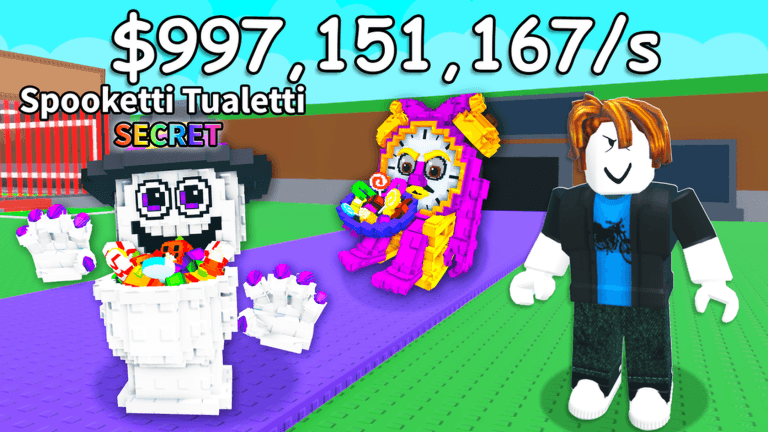
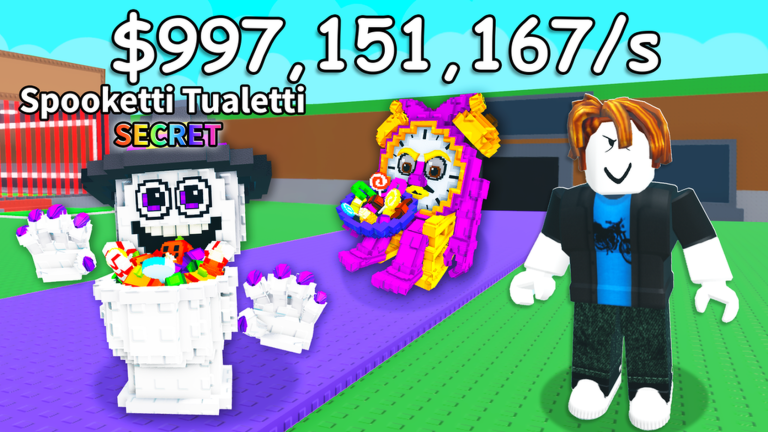
The most concrete content beat a video creator walked through was the divine admin machine update, which added a new divine admin machine, a Sami base, and a batch of lucky blocks, including an OP brain energy secret lucky block. The same update pass touched existing units, with the Headless Horseman reported as buffed to OG status, and the creator framed a further admin update as landing on a Saturday. Divine mutations sit alongside that as a rarity layer on units you already own, which is a smart retention move: it gives long-standing players a reason to re-evaluate their current roster instead of only chasing brand-new additions.
The unit catalog itself is part of the appeal. Lineups seen in recent coverage include Meowl, Skibidi Toilet, Dragon Cannelloni, Strawberry Elephant, John Pork, Rocketini Frostini, Frullato Framingo, and Chicleteira Surfeiteira, alongside reward-track pieces such as an Octo Lucky Block, an Octo base skin, and Waverider Gear. That variety keeps the collection side lively even when the core loop is unchanged.
Progression feel: money, brainrots, and rebirths
Progression in Steal a Brainrot runs on three currencies of effort: cash, unit strength, and rebirths. Independent coverage of the game puts it plainly, saying that stealing effectively requires money, strong brainrots, and rebirths. That is a healthier shape than a pure pay-to-win ladder, because each of those three can be earned by playing, and each one gates a different part of the game. Cash buys roster, roster generates more cash, and rebirths reset you into a stronger position for the next climb.
The risk with any rebirth system is the wall. If the cost curve steepens faster than your raid income, the loop starts to feel like a chore with a theft skin. The evidence reviewed does not include the specific rebirth costs or income curves, so this review will not pretend to know where that wall sits for your account. What can be said is that the game keeps giving you multiple parallel progress tracks, unit rarity, mutations, gear upgrades, and rebirths, which usually softens a single steep curve by letting you switch tasks when one stalls.
Update quality and content drought risk
Live-service Roblox games live or die on their pipeline, and Steal a Brainrot's recent history reads as frequent, themed drops rather than one giant expansion. Lucky block batches, base skins, gear pieces, unit buffs, and mutation types are the currency of its updates. That cadence suits a game with short sessions, because each small patch gives returning players a specific thing to check rather than a wall of content to grind through.
The flip side is that small patches are also easy to exhaust. If a future update only restocks lucky blocks without touching the raid economy or the rebirth curve, the loop will start to repeat itself quickly. The divine admin machine update shows the better version of this approach: it added a new machine, a new base, new blocks, and rebalanced an existing unit, which affects both collectors and raiders at once.
Monetization and fairness
The sources reviewed for this piece do not itemize specific storefront prices or gamepass costs, so there is no honest price tag to attach here. What the surrounding coverage does describe is a game where cash boosts can come from teaming up with friends, where weapons and gear are upgraded over time, and where base strategy matters as much as raw spending. That points to a design where money speeds things up rather than replacing play entirely, which is the fairer end of the Roblox spectrum.
On rewards, note that Steal a Brainrot's redemption page has none to redeem at the moment. This page is monitored and updates the moment new drops appear.
Retention hooks that hold, and hooks that wear out
The hooks that hold are structural. Base defense gives every session a small crisis, raids give every session a target, and mutations plus rarity give every unit a reason to matter beyond its cash output. Rebirths give the long-term player a horizon. Those four systems feed each other, which is why the game survives past its first week.
The hooks that wear out are cosmetic. New brainrot names and new base skins are enjoyable but shallow once your roster is full, and lucky blocks can start to feel like the same lottery in a different wrapper. The Headless Horseman style of balance change, where an existing unit is buffed back to relevance, is the more durable fix, because it changes what is worth owning rather than only what is available to own.
Who should start now, who should wait
Start now if you like short, social, adversarial loops: you want something you can play in ten-minute bursts, you enjoy defending a setup as much as building one, and you like collecting weird characters for their own sake. It is also a good fit for groups, since friends can team up for cash boosts and shared base defense.
Wait for the next content beat if you need a deep progression spreadsheet, a competitive ranked scene, or a long guaranteed runway of unique systems. The game's strengths are tempo and personality, not depth of mechanics, and players who need the latter will feel the repetition sooner.
Q: Is Steal a Brainrot worth playing in November 2026 if I missed the launch hype?
Yes, if the base-building plus raiding loop appeals to you. The launch glow is not what carries it; the repeatable defense and theft cycle, plus updates like the divine admin machine drop, is. Just expect a simple loop rather than a deep one.
Q: What do you actually do in Steal a Brainrot every session?
You collect brainrots for your base, collect the cash they generate based on rarity and mutations, defend them from other players, and raid rival bases with tools like bats, slappers, and traps while working toward stronger units and rebirths.
Q: Does Steal a Brainrot reward you for playing with friends?
Coverage of the game points to teaming up for cash boosts and coordinated base strategy, which makes group play a genuine advantage rather than a cosmetic social feature.
Verdict
Steal a Brainrot earns its popularity on loop design, not on spectacle. Its collection, defense, and raid systems feed each other cleanly, its updates keep touching the parts of the roster players already own, and its progression spreads effort across cash, unit strength, and rebirths instead of a single gate. Its weaknesses are equally clear: the loop is shallow by nature, cosmetic drops can start to blur together, and the specific balance of its rebirth curve and store pricing was not detailed enough in the sources reviewed to call either way.
The honest post-honeymoon read is this: play it if you want a fast, funny, social theft loop with regular small updates, and check back at the next content beat if you are waiting for something deeper. It is a good live service with a narrow identity, and it is at its best when it leans into the part no other game quite replicates, which is the moment someone walks off with your best brainrot and you have to decide how much of your stash you are willing to risk to get it back.
Steal a Brainrot Codes (November 2026)
No active codes yet for Steal a Brainrot; 24 unverified codes are being tracked.
Not yet fully verified. This list updates as sources are rechecked.
No verified active codes are currently recorded for this game. 24 community reported codes are awaiting verification in the Unverified Reports list below, with the source and date we recorded where available.