What health means for a game that lives on updates
A Roblox experience built on a short repeating loop does not get to stand still. If the developer stops feeding it, the loop that felt fresh on day one becomes a chore by day ten. So when we ask whether +1 Loot To Forge is healthy right now, we are really asking three narrower things: does the studio keep adding reasons to come back, does the existing loop still reward the time you give it, and does the game communicate anything outside of itself.
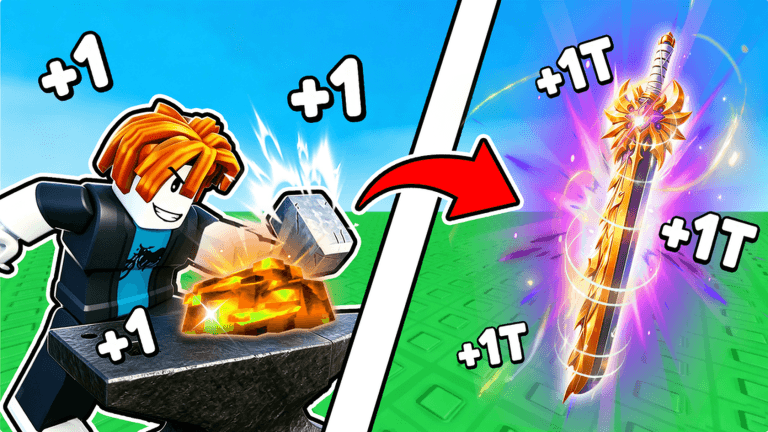
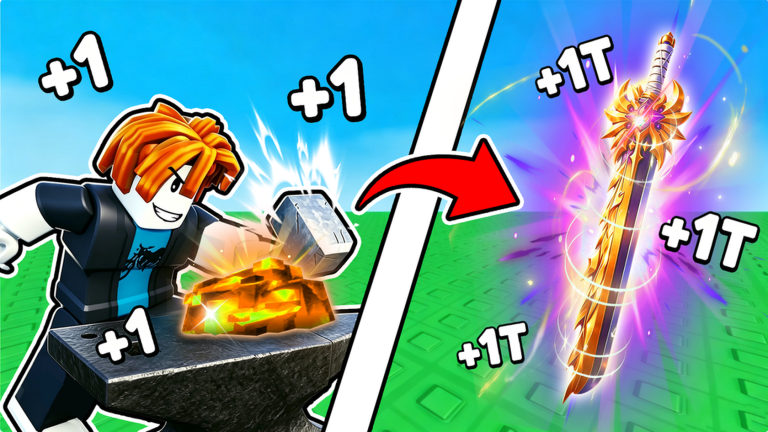
That framing matters here because +1 Loot To Forge is unusually legible about what it is. Every run follows the same path: click for power, beat enemy hordes, pick up ores, and forge those ores into stronger gear. Reviewers describe the same shape from different angles. One writeup puts it as looting and then forging: you slay enemies to earn ores, take them back to the forge, and come out with a stronger sword. The further you push while slaying monsters, the better the ore they drop, which means a stronger sword, which means you can survive stronger enemies and repeat. Everything starts with a single piece of loot, and that small increase quickly turns into more Power, better drops, stronger weapons, and a much bigger number on your screen.
That is a clean design, and clean designs are easy to patch and easy to break. Here is how +1 Loot To Forge is holding up.
The core loop: honest, readable, and built to snowball
The healthiest thing about +1 Loot To Forge is that its feedback loop never hides. You click, you gain Power, you clear a wave, you collect an ore, you forge. There is no ambiguity about why your sword got bigger or what the next upgrade is for. Progression is stated in raw numbers, which suits a game where a bigger backpack, a better race, or a temporary power spike can all make a difference.
Character building is layered on top of that loop rather than replacing it. You can reroll your character to chase better stats, then head back out through different difficulties of fights and see which ore you can earn. That reroll step is what keeps the loop from being purely linear: the same dungeon run is not the same run if your stats shifted, and the difficulty selection gives you a say in how risky the grind is.
Progression feel: three sinks, one loop
+1 Loot To Forge runs on three distinct resources, and the way they pull against each other is the real progression game:
- Coins pay for backpack capacity, Luck, and training. Capacity matters because loot keeps scaling upward, so a pack that worked in the early waves starts throttling you later.
- Race Rolls chase different race bonuses and damage modifiers, which is the build variety layer. This is where a run stops being about raw numbers and starts being about which bonuses you landed.
- Power Potions give a temporary boost to damage and stats, and they also speed up the click step, which makes later waves feel fairer rather than grindier.
That is a well-shaped triangle: one resource expands your carrying limits, one reshapes your build, and one smooths out the rough patch in a single session. The risk is that the temporary spike becomes a crutch, but because it is temporary, it functions as a session smoother rather than a permanent shortcut.
Update cadence and patch quality across the tracked window
The coverage signals available for this review cluster tightly in late September 2026. A piece by Belle Law published on Thursday, 24 September 2026, was followed by a further update to a guide on 27 September 2026. Within that window, the material points at a meaningful addition rather than a cosmetic one: a new races feature supported by Race Rolls, plus the Power Potion tuning that speeds the click step for later waves.
That combination is the interesting part. Shipping a new progression layer and, in the same breath, adjusting how the earliest verb of the game feels during the late game reads as pacing work, not just content volume. A studio that only drops new toys tends to leave the first ten minutes untouched while the endgame balloons; here the two shipped together.
The caveat is that the evidence in front of us does not contain a full patch log, so long-run cadence over months cannot be scored honestly. What can be said is that the experience was attracting fresh, updated coverage inside a single week of September 2026.
Event rotation and re-run handling
There is no documented seasonal event calendar for +1 Loot To Forge in the material reviewed here, so claims about holiday events or re-run schedules would be invented. What exists instead is a permanent chase structure: Race Rolls give you an ongoing reason to reroll toward better bonuses, and Power Potions give you an on-demand boost when a wave stalls. In practice this means the game does not depend on a calendar event to feel alive; the reroll hunt is the rotation.
The weakness of that model is that it never resets. A rotating event gives returning players a reason to feel they picked a good week to come back. A permanent reroll chase gives them the same task they left. For long-term retention, that is the open question.
Communication and bug response
The experience presents external community channels in the form of a Discord and a Trello board alongside its store page, which gives players somewhere to go when something breaks and somewhere to look for what is next. Third-party coverage is also actively maintained, with a guide updated on 27 September 2026 and an invitation for readers to report problems they spot. That is a reasonable communication footprint for an experience at this scale, even if the evidence does not include a specific bug fix turnaround to grade.
Player count trend as a viability signal
This is where an honest review has to stay quiet. The tracked game info panel in the material reviewed returned no player, visit, or favorite figures, so no population trend can be stated here. Anyone grading viability off a player count number would be guessing. The substitute signal is attention: multiple outlets covered the same loop, and one guide was refreshed three days after publication, which is consistent with an experience people expect to keep changing.
Monetization pressure: what the systems ask of you
The evidence does not document specific shop prices, paid items, or purchase tiers, so no figures belong in this section. What can be assessed is the shape of the pressure the systems create. Coins pull you toward permanent capacity and stat upgrades, Race Rolls pull you toward rerolling a build you already have, and Power Potions pull you toward smoothing a session you are currently stuck in. Of those, the reroll is the deepest sink, because there is no ceiling on wanting a better race.
Fairness reads as reasonable on the loop side: upgrades are earned through the same slaying and forging you do anyway, and the power boost is temporary by design. The pressure point is convenience. Any moment where a reroll or a potion turns from a nice-to-have into a feels-like-required purchase is the moment this stops being a chill numbers game.
FAQ
Q: What do you actually do in 1 Loot To Forge from session to session?
You click to build Power, clear waves of enemies, collect the ores they drop, and take those ores to the forge to make a stronger sword. Better swords let you push into stronger enemies in higher difficulty fights, which drop better ore. Along the way you spend Coins on backpack capacity, Luck, and training, and you can reroll your character to chase better stats.
Q: What are Race Rolls and Power Potions for in 1 Loot To Forge?
Race Rolls let you chase different race bonuses and damage modifiers, which is how you reshape a build instead of only upgrading it. Power Potions give a temporary boost to damage and stats and speed up the click step, which is aimed at making later waves feel fairer rather than forcing you to grind them raw.
Q: Are there any rewards to claim in 1 Loot To Forge right now?
No rewards can be claimed yet for 1 Loot To Forge. There are currently none to redeem. When new codes are released, they will appear in the live list on this page, and this page is monitored and updates the moment codes drop. Redemption, once something appears, happens in the Shop menu: open the Shop button on the left side of the screen, scroll to the bottom of the menu, paste into the bar, and click Submit.
Verdict: who should play, and who should wait
For new players: +1 Loot To Forge is worth your time if you like readable, compounding number games where the next upgrade is always one forge away. The loop is transparent, the three resource sinks do different jobs, and the difficulty selection lets you set your own pace. Go in expecting a slay, collect, forge cycle and you will not be surprised.
For returning players: the reason to come back is build chasing. Race Rolls and the races feature are the piece that changes what a run feels like, and the Power Potion tuning suggests the studio is watching how the early verb holds up in later waves. What is still unproven from the outside is whether the game layers in scheduled events on top of its permanent reroll chase, because that is what gives a returning player a good week to come home to.
Skip it if you want a story, structured endgame, or evidence of a bustling population before you invest. None of that is established here, and the game does not pretend otherwise.
Overall, +1 Loot To Forge presents as a live service with a solid spine and active late-September attention rather than a finished product coasting on one launch. The loop is the strength. The open question is whether the studio keeps decorating the loop, or eventually restructures it.
1 Loot To Forge Codes (October 2026)
No active codes yet for 1 Loot To Forge; 2 unverified codes are being tracked.
Not yet fully verified. This list updates as sources are rechecked.
No verified active codes are currently recorded for this game. 2 community reported codes are awaiting verification in the Unverified Reports list below, with the source and date we recorded where available.