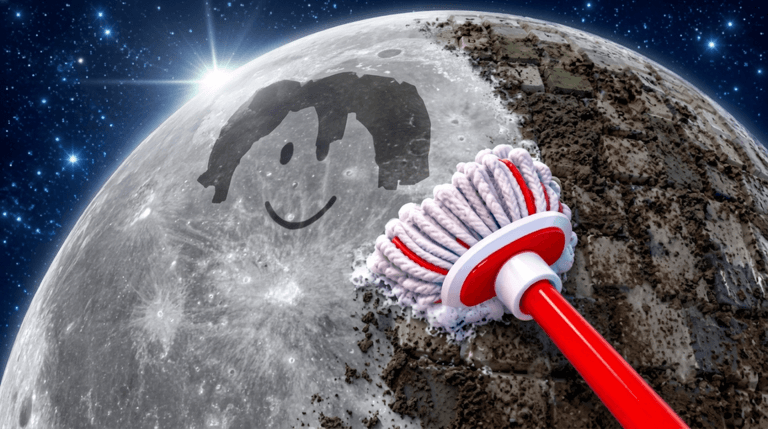
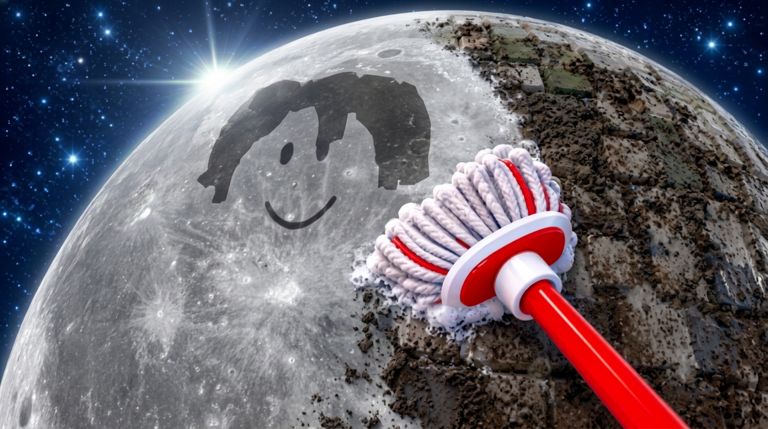
Before you chase a faster route in Clean the Moon!, read the shape of the grind itself. The experience is an incremental simulator from Lunarlit Works built on a simple loop: you sweep moon dust, space junk and meteor debris off the lunar surface, sell what you collect, then reinvest the money into better equipment and an increasingly automated lunar base. Efficiency is not about sweeping harder, it is about deciding which part of that loop is currently your bottleneck and feeding it first.
One honest note before the math talk. This article quotes no XP-per-minute figures or per-minute cash rates, because the research behind it does not publish any. What it does publish is the structure of the currencies and the systems they buy, which is what actually determines whether your next ten minutes of sweeping were well spent.
The Currency Flow: Cash, Gems and Candy
Everything you sweep feeds one river. Moon dust, space junk and meteor debris are swept, collected, then sold for cash, and that cash is what pays for your broom, backpack and moon boots upgrades. The chain is short on purpose: sweeping feeds selling, selling feeds gear, gear feeds faster sweeping.
Gems sit beside that chain rather than inside it. Gems are spent on Classes, and Classes change how efficiently your runs go. Some Classes raise your carrying capacity, others speed up how quickly you move across the lunar surface. That makes Gems the currency you want when a run stalls because you are hauling a full backpack slowly, not the currency you spend on a whim mid-session.
Candy is a third resource that was tied to a seasonal event. With that event over, its usefulness may change, so treat any Candy balance as money you should not plan a route around right now.
Read Your Bottleneck Before You Build a Route
Ask one question at the start of every session: is my time lost to slow sweeping, slow walking, or slow selling? Each answer points at a different fix.
If you are constantly capped by how much you can carry, your bottleneck is capacity, which is what a Class like Bigger Tank targets. If you spend most of a run walking between debris and your sell point, your bottleneck is movement, which is what Quick Feet targets. If your returns per haul feel thin, Better Deals is the lever. Pocket Money addresses the starting cash position of a run. Everyone begins at Rookie, so an early Gem spend on a different Class is the fastest way to change your numbers without touching your equipment at all.
Only once those three questions have answers should you route your cash into broom, backpack and moon boots. Gear upgrades compound, but they compound from a Class that already suits your play style.
Route Order: Stack Classes, Then Robots, Then Base
The most time-respecting order in Clean the Moon! is the one that removes manual work earliest.
First, buy the Class that fixes your bottleneck. The early Class prices are deliberately small: Bigger Tank costs 3 Gems, Better Deals costs 4 Gems, Quick Feet costs 5 Gems and Pocket Money costs 8 Gems. At those prices, the payback period is short, and you feel the difference in the very next run. Later Classes cost considerably more, some at 25 Gems and 35 Candy, others at 40 Gems, so they belong at the end of a spending queue, not the start.
Second, unlock cleaning robots. Robots automate part of the work, which means they convert a system that previously needed your attention into one that does not. Automation is the single biggest efficiency jump available, because it runs whether or not you are actively sweeping.
Third, expand the lunar base. Building and expanding your base is the long-horizon investment. Do it once your classes and robots are already carrying the short-term load, otherwise you are funding a structure while your runs still leak time.
Alongside that personal route, remember the map itself gates progress. New craters and zones unlock as you advance, so a zone you cannot reach yet is not a route failure, it is a locked tier waiting on the tier before it.
Caps and Diminishing Returns: When to Stop Sweeping
No published cap numbers exist for Clean the Moon! in this research, so the stopping rule here is behavioural rather than numeric. Stop sweeping a stretch of surface when your returns no longer move your current goal forward. If you have already sold enough to afford your next Class or upgrade, another hauling cycle spends time on a purchase you have already funded.
The clearest diminishing return is capacity. A backpack that fills before you reach your sell point wastes every step of the walk back. When that pattern repeats twice in a row, the efficient move is to stop and spend, not to squeeze in one more sweep.
The second return-killer is doing solo what a group does better. Clean the Moon! supports cleaning alongside other players, and you can enlist up to three others, so a four-player session spreads the sweeping across the lunar surface instead of concentrating it in one broom.
What to Buy With the Time You Saved
Time reclaimed from an optimized route is only worth something if it converts into progress. Spend it in this order: the Class that fixes your bottleneck, the gear tier directly above your current broom or backpack, cleaning robots to lock in automation, then base expansion. Anything at the 40 Gem tier or the Gem-plus-Candy tier is a stretch goal you work toward once the cheap Classes are already earning their keep.
Keep the community channel open too. There is a Discord server specifically for Clean the Moon!, linked on the game's Roblox page, where players share updates and information about the game. Route information goes stale fast in incremental games, so check there before committing a long session to a plan.
Q: Which Class should I unlock first in Clean the Moon!?
Match the Class to your actual bottleneck. Bigger Tank at 3 Gems fixes runs cut short by a small carrying capacity, Quick Feet at 5 Gems fixes slow movement across the lunar surface, Better Deals at 4 Gems improves what your haul returns, and Pocket Money at 8 Gems changes your starting position. Everyone starts at Rookie, so the cheapest matching Class gives the earliest payoff.
Q: Should I spend cash on gear or save for cleaning robots?
Robots automate part of the cleaning work, which makes them the bigger long-term jump, but broom, backpack and moon boots upgrades are what make your current manual runs faster. The efficient order is to fix the Class bottleneck first, fund the gear tier you are actually using, then move into robots and base expansion.
Q: Are there any codes to redeem in Clean the Moon! right now?
There are currently none to redeem. This page monitors the code list and updates the moment new ones drop, and codes for this experience do get reported by the community before they are confirmed, so any rewards will show in the live list once they are grounded.
Closing: Optimize the Loop, Not the Grind
Clean the Moon! rewards players who read its loop before pushing through it. Map your bottleneck, buy the Class that removes it, route cash into the gear you are using, then let robots and your lunar base take over the work you no longer need to do by hand. Check the official Discord before you plan a long session, and let the locked craters wait for the tier that opens them. That is the whole efficiency argument: fewer wasted sweeps, more purchases that actually change how fast you clean.
Clean the Moon! Codes (November 2026)
No active codes yet for Clean the Moon!; 7 unverified codes are being tracked.
Not yet fully verified. This list updates as sources are rechecked.
No verified active codes are currently recorded for this game. 7 community reported codes are awaiting verification in the Unverified Reports list below, with the source and date we recorded where available.